



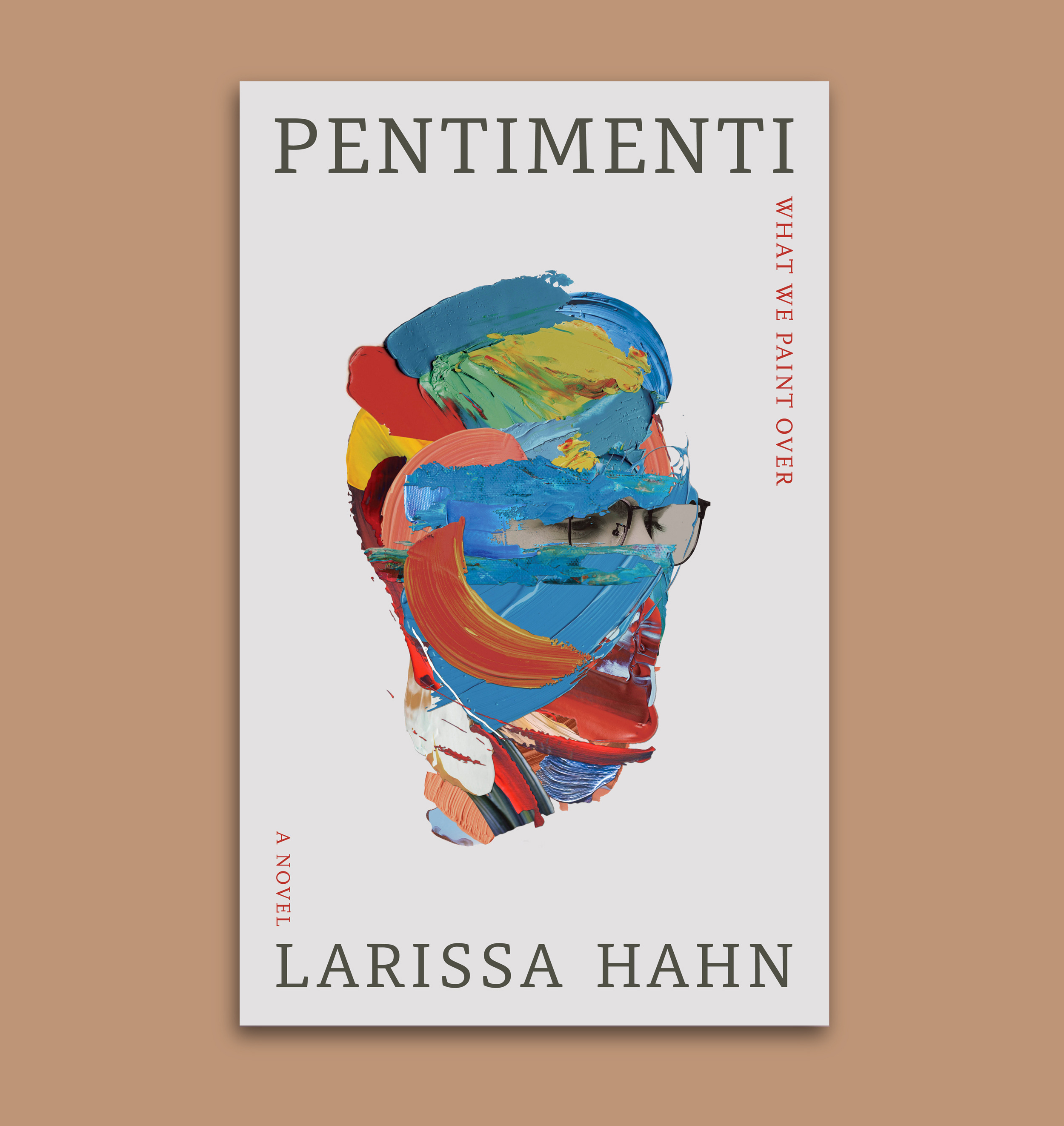
There’s something quietly complicated about being asked to read a friend’s work.
You want to be honest. You want to be supportive. And sometimes those two things don’t sit comfortably together.
But every now and then, you come across something that makes it easy.
Pentimenti was one of those for me.
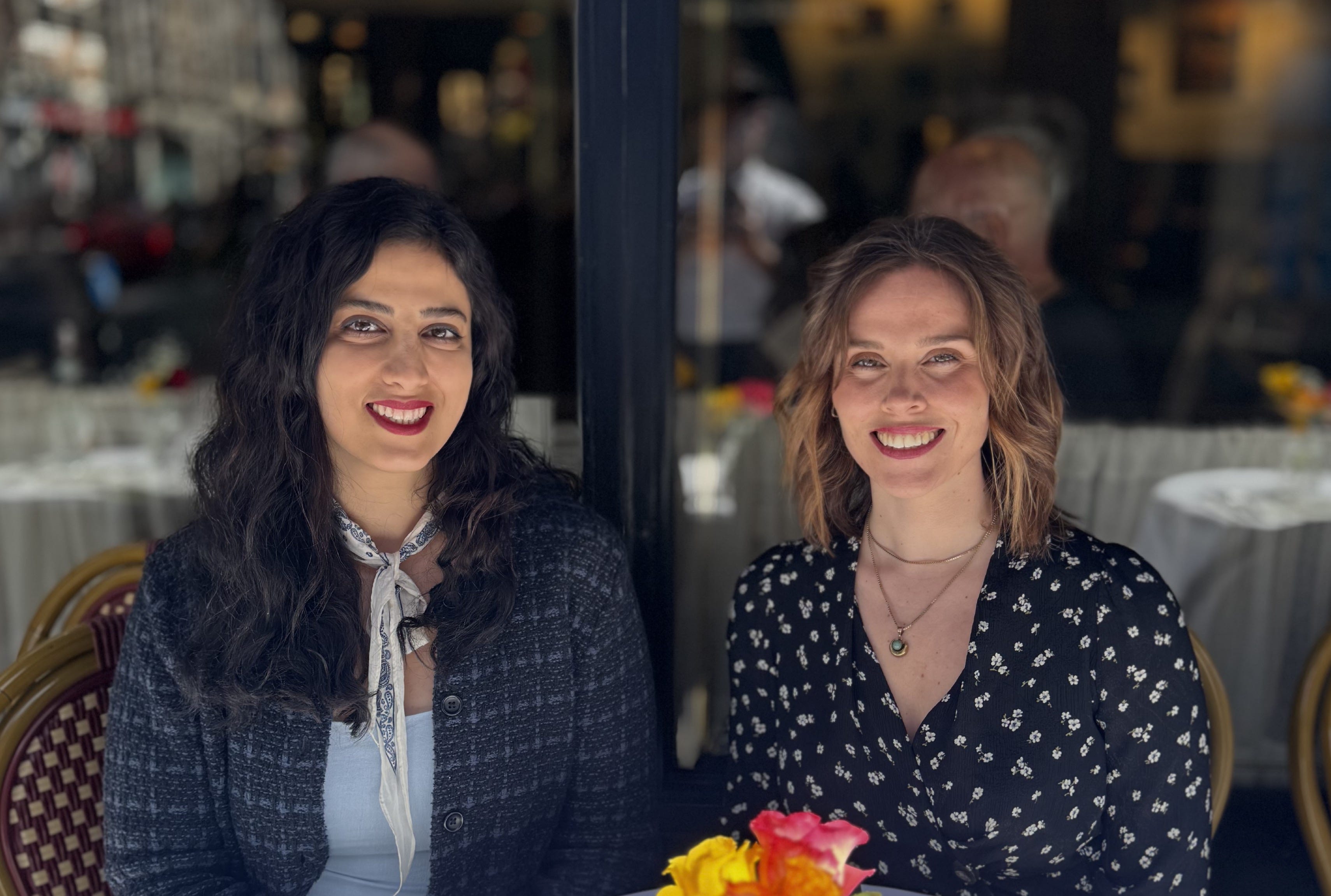
I met Larissa at one of our Substack gatherings in London—back when I was still adjusting to the city, feeling more introverted than I care to admit. She was warm in that effortless way that makes conversation feel easy. We’ve been friends since. One of those quiet, unexpected connections that platforms like Substack somehow make possible.
When she first told me about her novel, I immediately felt drawn to it. Something in the protagonist felt familiar. I knew I wanted to read it.
When the manuscript was finally ready, she asked me for honest feedback—which I’ll share in a separate post. But while waiting for Pentimenti to be officially published, I wanted to sit down with her and talk about the journey behind it.
Because this is a book that asks for patience. The kind where you stay with it long enough for it to settle into you—slowly, quietly—until it begins to move.
There’s a particular kind of patience expected of debut novelists.
Finish the manuscript. Find an agent. Wait. Then wait again.
For some, that process is part of the craft. For others, it becomes a barrier.
After four years of writing, Larissa chose a different path—reclaiming that patience and deciding to self-publish on her own terms.
Her novel centres on a man quietly unravelling beneath the weight of a life that appears complete from the outside. But at its core, it feels uncomfortably familiar—about the dreams we’ve set aside, the quiet unhappiness we carry, and the choices we make in learning how to live with these feelings.
We spoke about self-publishing, doubt, and what it means to finally release something that has lived with you for years.
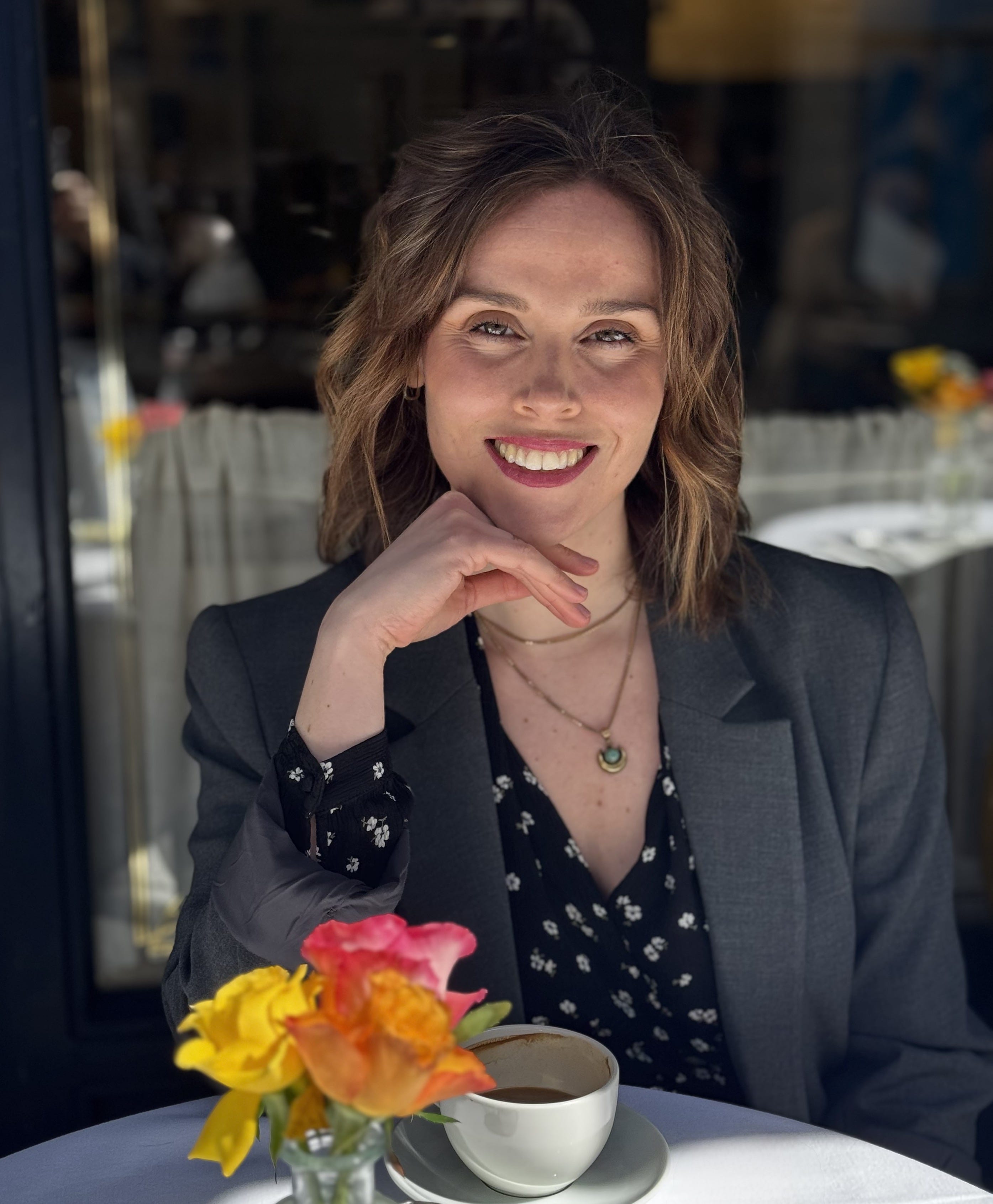
What made you decide to self-publish your first literary novel Pentimenti?
It took me four years from the very early character sketches of Philian to finishing the first draft of Pentimenti. During that time, I frequently engaged with my writing community and listened to the diverse experiences of others who either went down the traditional publishing route or did it all by themselves.
For a long time, I was indecisive about how I wanted to proceed. But having already spent years writing this novel, the prospect of waiting even longer in the hope it might get picked up by an agent and then a publisher felt increasingly daunting. I’d poured so much of myself into Pentimenti, and I wanted it out in the world. My ultimate goal is to entertain my readers with my story, but I also needed to prove to myself that I could complete this project from start to finish and see myself as a serious author.
There are pros and cons to both paths, but in the end, that desire to take ownership of the work and trust my own vision is what pushed me to self-publish. That also meant investing in a professional editor and book designer, because I still wanted to achieve a high standard, as I feel most serious self-published authors do nowadays.
Do you remember how the idea for the book first came to you?
I actually remember this moment quite well. It was during a City University course on writing longer works of fiction, one my husband had gifted me for our first Christmas after we moved from Germany to London. I’d recently completed a series of creative writing courses through Wesleyan University, but up until that point I had only ever written short pieces. At the start of the City University course, we were asked to submit chapters of the novel we were currently working on. I obviously hadn’t yet begun.
I remember standing in the kitchen, preparing a roast chicken for Max and myself, when I was suddenly struck by the image of this painter feeling suppressed by societal expectations and obligations. A man who had “made it” : a well-paid job, a beautiful family, but who felt trapped in his idyllic life. A life he secretly perceived as meaningless, which kept him from his art. It was an intriguing image, and I immediately felt this was a character I wanted to understand more deeply.
Even though Philian’s path in Pentimenti is purely fictional, I can’t deny that some of my thoughts, fears and experiences found their way into the narrative. I myself had just left a job in finance that I’d found deeply unfulfilling and was now writing a book, trying to discover whether I could live a more meaningful life through my writing.
What was the hardest part of writing it?
This is a tough question to answer. Writing in general is hard. Writing a story that not only reads well but actually keeps readers wanting to sit with it for hours or days is a testament to craft, creativity, endurance, and a constant battle with your inner critic who always makes you doubt your skill and ability. I hold unending admiration for authors like O’Farrell, Shafak, McCarthy, Szalay — just to name a few of my favourites — who manage to write stories that feel so effortless. Beautifully crafted language, creative imagery, yet so precise, so crystal clear in transporting the message, so engaging, so vivid and all-consuming. For me, that is true artistry.
But in every novel there are passages that exist purely to move the story along, the transition chapters that bring us from A to B. I found these particularly hard to write, especially during phases when I felt uninspired, as they don’t really call on the most creative part of my brain. I also found it difficult to stick with a story for such a long time. There were phases in my private life that pulled me away from writing, and it wasn’t always easy to find my way back into the specific themes and world of Pentimenti.
But I have rarely felt such a sense of accomplishment as when I wrote “The End” beneath the last line of Philian’s story.
Did you ever feel like giving up at any point? What kept you going?
Interestingly enough, I never actually thought I wouldn’t finish Pentimenti. There were certainly phases where I felt disconnected from the story, or where I wasn’t as productive or creative as I wanted to be, and there were times I wondered whether the whole thing actually made any sense (as I said, it took a damn long while to finish). But strangely, I never once thought about binning it. I think it’s because the themes it deals with felt too important to me, especially at that point in my life, to just leave them unfinished.
How was it being in charge of everything — editing, cover design, publishing?
It’s been a lot of work, but rewarding work. Editing is something every writer has to go through, and I’m grateful I had the chance to work with someone as talented as my editor David. He truly understood my vision and what I wanted to say with the novel, while also being honest and thorough in his critique. There’s actually a whole subplot he flagged that didn’t make it into the final book, and with hindsight I’m so glad he pushed me to rethink it. We still laugh about it to this day, as it really had no place in the story.
Finding the right editor can be tricky, of course. Without an agent, you don’t have someone who knows exactly who might be a good fit for your book. But in the end, I was pleased to have made that choice myself, and the same goes for my cover designer. I’ve heard traditionally published authors say they had very little say in those kinds of decisions, so being in control of that process felt like a genuine advantage.
The marketing side is where I struggle most. I’m not naturally a big social media person, and I know it’s something I need to lean into more. Overall, I’ve enjoyed wearing these different hats, even if it’s been a steep learning curve. There’s still plenty more to learn, but I wouldn’t change the experience.
Did self-publishing feel more like freedom or pressure?
For this particular project, it felt more like freedom. I was still at the very beginning of my writing journey when I started Pentimenti, with so much still to learn about the craft, so it was wonderful to be able to work at my own pace without any deadlines hanging over me. But with that kind of freedom comes a great deal of responsibility. The success of the whole project rests squarely on your own shoulders, and that brings its own pressures and anxieties, especially when you’re doing something for the very first time. You find yourself constantly questioning whether you’re really done with the edits, whether you’re truly happy with the design, whether the book will look and feel professional, whether you’ve met the standards you set for yourself. I think you simply can’t have one without the other.
How are you feeling now that Pentimenti is about to be out in the world?
Excited, relieved, self-doubting yet proud to have finished it, hopeful, and more than ready to move on to my next project!
What does “success” look like to you for this book?
Success would be a stranger picking up my book, reading it from start to finish, and taking away one thought or idea that made them feel something true.
If readers take one thing away from your book, what would you want it to be?
Pentimenti is not a feel-good book. It certainly doesn’t offer a neat blueprint for navigating life’s difficult decisions. But through the cautionary example of Philian, I hope to have shown that none of us are immune to our own blind spots. That we don’t have to face our struggles alone. That our emotions and instincts, however strong, aren’t always the ones to trust. At its heart, I believe the book is about the value of communication, of the courage to share your emotions and thoughts openly, of trusting the people who love and support you. And about recognising that the solution we believe is our only option is rarely the only one.
Pentimenti will be published on 18 May. I’ll share the link here once it’s out.
In the meantime, if you’re drawn to quiet, introspective novels—the kind that don’t rush to explain themselves, but instead ask you to sit with them—this is one to keep an eye on.
I’ll be sharing my full thoughts on the book very soon.
Thanks for reading☺️ If you liked this review, press ❤️ and share it with your friends!

Really interesting to read about Larissa's journey and experience of self-publishing. The cover is beautiful.
This is such an inspiring interview, and wonderful to see how Larissa motivated herself going through this long journey to publication. Congratulations!